
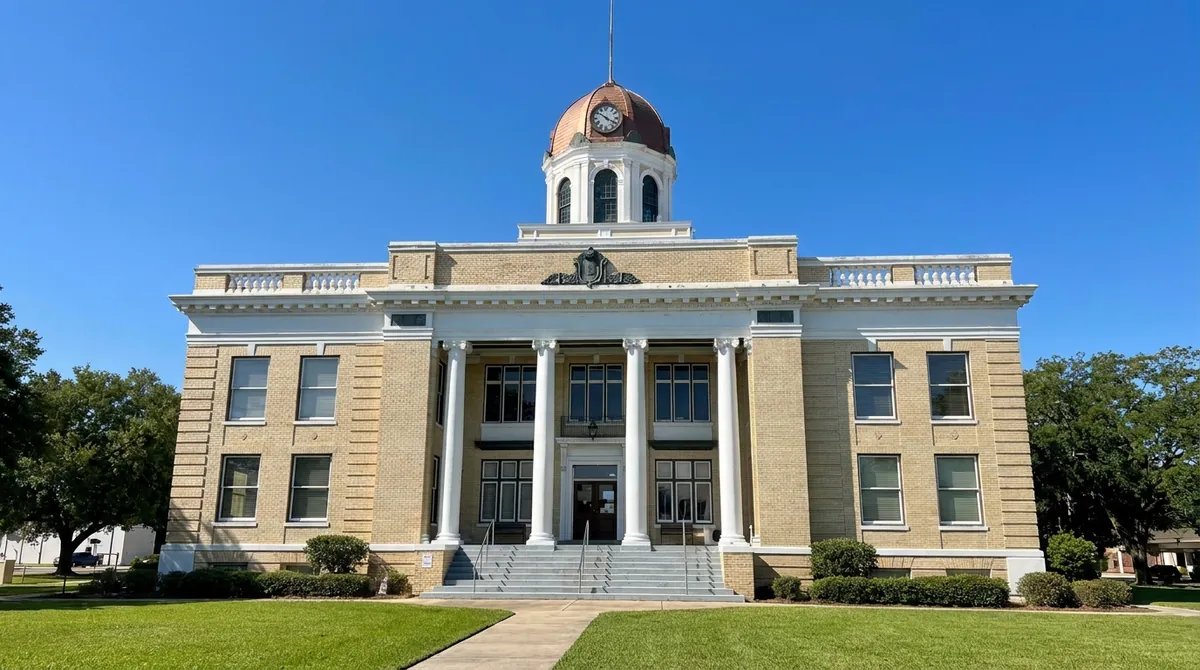
Court records in Gadsden County, Florida, are maintained by the Clerk of the Circuit Court and can be accessed through online tools, official court portals, and the clerk's office. GadsdenCourt.us can help you find publicly available court record information for Gadsden County. You can also search records through the Florida Courts website, the 2nd Judicial Circuit's online resources, and by contacting the clerk's office directly.
Gadsden County Court System Overview
Gadsden County is part of Florida's 2nd Judicial Circuit, which also includes Franklin, Jefferson, Leon, Liberty, and Wakulla counties. The circuit court in Gadsden County handles both circuit-level and county-level cases through its circuit and county court divisions. Circuit judges hear felony criminal cases, major civil disputes, family law matters, probate, and juvenile cases, while county judges preside over misdemeanors, small claims, traffic infractions, and lower-value civil disputes. The main courthouse is located at:
Courts Serving Gadsden County
| Court | Address | Phone |
|---|---|---|
| Gadsden County Circuit Court (2nd Judicial Circuit) | 10 East Jefferson Street, Quincy, FL 32351 | 850-875-8601 |
| Gadsden County Court | 10 East Jefferson Street, Quincy, FL 32351 | 850-875-8601 |
| U.S. District Court, Northern District of Florida (Tallahassee Division) | 111 North Adams Street, Tallahassee, FL 32301 | 850-521-3501 |
| U.S. Bankruptcy Court, Northern District of Florida (Tallahassee Division) | 110 East Park Avenue, Tallahassee, FL 32301 | 850-521-5001 |
Gadsden County does not have a separate municipal court. All criminal and civil matters at the local level are handled through the circuit and county court divisions at the Gadsden County Courthouse.
What Types of Cases Gadsden County Courts Hear
Courts in Gadsden County handle a wide range of case types across the circuit and county divisions:
- Felonies and misdemeanors
- Traffic infractions and criminal traffic offenses (including DUI)
- Civil litigation (all dollar amounts)
- Small claims
- Family law — divorce, custody, child support, paternity, domestic violence injunctions
- Probate — decedent estates, guardianships, trusts
- Juvenile — delinquency and dependency proceedings
- Adoption and termination of parental rights
The sections below explain which court division handles each category.
Circuit Court Cases in Gadsden County
The circuit court division in Gadsden County has jurisdiction over more serious and complex matters. This includes all felony criminal cases, civil lawsuits where the amount in controversy exceeds $50,000, family law cases (divorce, custody, child support, paternity, and domestic violence injunctions), probate and guardianship proceedings, and juvenile cases. The circuit court also hears appeals from the county court division. Cases typically arrive at circuit court through formal filing of a complaint or petition, or through bindover from the county court after a felony preliminary hearing. A circuit judge is assigned to each case, and proceedings follow the Florida Rules of Court and any applicable 2nd Judicial Circuit administrative orders.
County Court Cases in Gadsden County
The county court division handles matters that fall below the circuit court's thresholds. Under Florida law, county courts hear:
- Misdemeanor criminal cases and criminal traffic offenses
- Non-criminal traffic infractions
- Civil disputes where the amount in controversy is $50,000 or less
- Small claims cases (currently up to $8,000)
- DUI arraignments and related hearings
- County and municipal ordinance violations
County judges also conduct first-appearance hearings and felony preliminary hearings before cases are transferred to circuit court. If Gadsden County's caseload warrants it, specific county judges may be assigned to handle particular case types such as traffic or small claims dockets.
Family Law, Probate, and Juvenile Matters in Gadsden County
Family Law: Divorce, child custody, child support, paternity, civil protection orders (domestic violence and repeat violence injunctions), and termination of parental rights are all heard by the circuit court division. Parties can file petitions at the Gadsden County Clerk of Court's office. Divorce certificates for record-keeping purposes are available through the Florida Department of Health, while the actual court file is maintained by the clerk. Marriage certificates issued before June 6, 1927, are obtainable from the Clerk of Court in the county where the license was issued.
Probate: Decedent estates, guardianships, conservatorships, and trust matters are handled by the circuit court's probate division. Filings are made through the clerk's office at the Gadsden County Courthouse.
Juvenile: Juvenile delinquency cases and dependency (child protective) proceedings are heard in circuit court. Juvenile court records are confidential under Florida law and are not available for general public inspection. The Florida Department of Juvenile Justice and the Department of Children and Families work with the court on these cases.
How Cases Move Through the Gadsden County Court System
- Filing or initiation: A case begins when a complaint, petition, information, or indictment is filed with the Gadsden County Clerk of Court. Criminal cases are initiated by the State Attorney's office; civil cases are filed by the plaintiff or petitioner.
- Case assignment: The clerk assigns the case to a judge based on case type and the circuit's case assignment procedures.
- Initial hearing: Criminal defendants appear for arraignment or first appearance. Civil parties attend a case management or scheduling conference.
- Pre-trial phase: Both sides exchange evidence through discovery, file motions, and — in criminal cases — may engage in plea negotiations. Civil cases may involve mediation.
- Trial or resolution: Cases are resolved by plea agreement, bench trial, jury trial, settlement, or default judgment.
- Post-judgment: Criminal cases proceed to sentencing. Civil cases may involve enforcement of judgments or appeals. Appeals from county court go to the circuit court; appeals from circuit court go to the First District Court of Appeal. The Florida Appellate Case Information System provides access to appellate dockets and documents.
Court Administration, Local Rules, and Public Access in Gadsden County
The 2nd Judicial Circuit's chief judge oversees court administration across all six counties in the circuit, including Gadsden County. A trial court administrator assists with day-to-day operations. Administrative orders, court calendars, and local rules for the circuit are published on the 2nd Judicial Circuit website.
Public access to records: Under Florida's broad public records law (Chapter 119, Florida Statutes) and the Florida Rules of Judicial Administration, most court records are open to public inspection. Exceptions include juvenile records, certain family law records involving minors, sealed or expunged criminal records, and other categories specifically exempted by statute. You can submit a public records request to the clerk's office in person, by mail, or by phone.
Attending hearings: Court hearings at the Gadsden County Courthouse are generally open to the public. Some proceedings may be conducted remotely via audio or video technology, depending on the judge's orders and the 2nd Circuit's administrative procedures. Contact the clerk's office at 850-875-8601 to confirm hearing formats and courtroom locations.
Court Records and Related Court Resources in Gadsden County
- Statewide court docket search: The Florida Courts website provides access to dockets and case information across the state court system, including tools for searching circuit and county court records.
- Appellate case search: Use the Florida Appellate Case Information System to look up dockets and documents from Florida's District Courts of Appeal and the Supreme Court.
- Court calendars and administrative orders: Hearing schedules and administrative orders for Gadsden County are available through the 2nd Judicial Circuit's Gadsden County page.
- Vital records and certificates: Birth, death, and marriage certificates are available from the Florida Department of Health in Gadsden County. Divorce certificates can be requested from the Florida Department of Health's statewide office.
- Inmate and offender search: The Florida Department of State's county jail directory lists local jail contact information and inmate search tools. For state prison inmates, use the Florida Department of Corrections offender search.
- Sex offender registry: The Florida Department of Law Enforcement maintains the statewide sex offender and sexual predator registry, searchable by name, location, or other criteria.
- Wanted persons and criminal history: FDLE's Public Access System includes Florida warrant information. Criminal history record checks can also be requested through FDLE's Criminal Justice Information Services.
- Historical and archived records: The State Archives of Florida preserves historically significant government records, which may include older court documents and related materials.
- Tax records: Property tax records and related documents are available through the Gadsden County Tax Collector's office.
- Additional court record searches: GadsdenCourt.us provides a starting resource for locating publicly available Gadsden County court record information online.